Home Improvement

The lamppost from hell

Our lamppost has been crooked since day one of moving into our house. Well, I’ve been on a mission this spring and summer to beautify the outside of our home. Landscaping, shutters, new doors, painted driveway, new mailbox, tree removal, new lattice for the garbage, redoing the rocks alongside the driveway… you name it, we’ve tackled it. My dad even removed the well from our front yard because he’s awesome.

He even took pictures for me to put on my blog.

RemovingFrontPipe1

RemovingFrontPipe4

With the biggest eyesore of our front yard removed, we pretty much had no choice but to tackle the crooked lamppost.

It also helped that while we were on vacation by dad cleared out a spot for plants and bought a few stones to circle the post. He basically forced us into it haha.

See how much it leans? Bad news bears.

Lamp Post1

So this lamppost was the post from hell. Originally, I bought a new post to replace it all together. Then my dad suggested I simple paint the current post in the ground. So I tried that.

Lamp Post3

Many coats of black spray paint later, and it wasn’t looking to bad.

Lamp Post2

Then came time to replace the fixture at the top, which I guess we didn’t have to do…. except that when we took it off we realized it was disgusting and broken.

The fixture came off the post just fine, but the ring and the screws holding the fixture to the post wouldn’t budge. At all. I tried every trick in the book to remove those screws, from WD-40 to putting a rubber band in the groove of the screw and turning it that way. Nothing worked. So I got fed up and started to tear the metal off the post. We were going to replace that part anyway, so what did it matter?

Well, here’s a fun fact. Hammering a screw driver into metal creates a lot of sharp metal pieces. And yes, I did manage to cut my hand. And yes, I did (eventually) get a tetanus shot for the cut. And yes, the place where I got my shot it still swollen because I’m a hot mess.

See why it is the lamppost from hell yet?

If you weren’t convinced, after all of my hard work on the darn pole, I got fed up and pulled it out of the ground. I ended up trekking back to Home Depot (that’s really melodramatic since Home Depot is less than 10 minutes away… not too much of a trek) to buy and even nicer lamppost than the first one I bought. I’m talking about a built-in light sensor and an outlet. Hot damn!

Hours later, my husband and I (mainly Brian — I was so proud of him!) managed to properly wire up the new post. I don’t think I’ve ever shouted so loudly with glee over a darn light working, but we were both really shocked and really excited that it worked.

Now our post isn’t crooked (we still need to cement it in place), it has a light sensor so it turns on automatically, and it is beautifully landscaped 🙂 Total win.

Lamp Post Finished

That lamppost ain’t got nothing on us.

And it looks nice, too!
Craft Projects

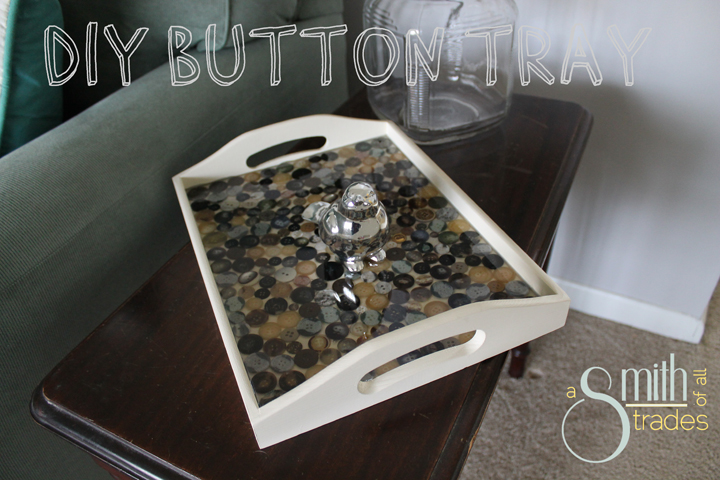
DIY Button Tray


IMG_0160

Need a fun project for the upcoming weekend? Why not try making your own button tray?!

This tray takes a while, but the end result is totally worth it.

Supplies:

Step one: Prepare your tray for painting by doing a light sanding (if necessary).

Plain tray

Step two: Apply several coats of paint to your tray, allowing adequate dry time in between coats. I opted for an off-white color for my tray.

Step three: Once your tray is dry, start securing buttons to the bottom using glue. I used super glue until I ran out of it and switched to hot glue. Glue your buttons as close to one another as possible. Do not skip the gluing step because the buttons will rise when you pour on your super glaze.

Button Tray

Button TrayStep four: When all of your buttons are secure and the entire tray is filled, it is time for your super glaze. I buy mine from Home Depot. Mix up your super glaze according to the directions pon the box (1:1), then pour over the buttons. To get the best results, I poured my first layer and let it dry for the recommended 72 hours. Then I came back and poured a second layer to fill in any nook, crannies and buttonholes.

Step five: This is the hardest part — let your tray dry for the full 72 hours. I had to wait twice since I did mine in two layers! If you don’t, you will get fingerprints on the clear finish and it might be tacky. Also, let the tray dry in the warmest room in your house. I let mine dry in our office — the hubby’s computer makes it super warm. When I let it dry in our cool basement, the finish on the super glaze was tacky to the touch. Always place cardboard underneath in case anything leaks out (which is did because my tray cost $.50 and wasn’t the greatest work of construction known to man).

IMG_0151

Step six: Admire your hard wok and patience by displaying your beautiful tray proudly in your home.

IMG_0152

Button Tray square


Craft Projects, Furniture, Pallet Projects

Pallet Ottoman

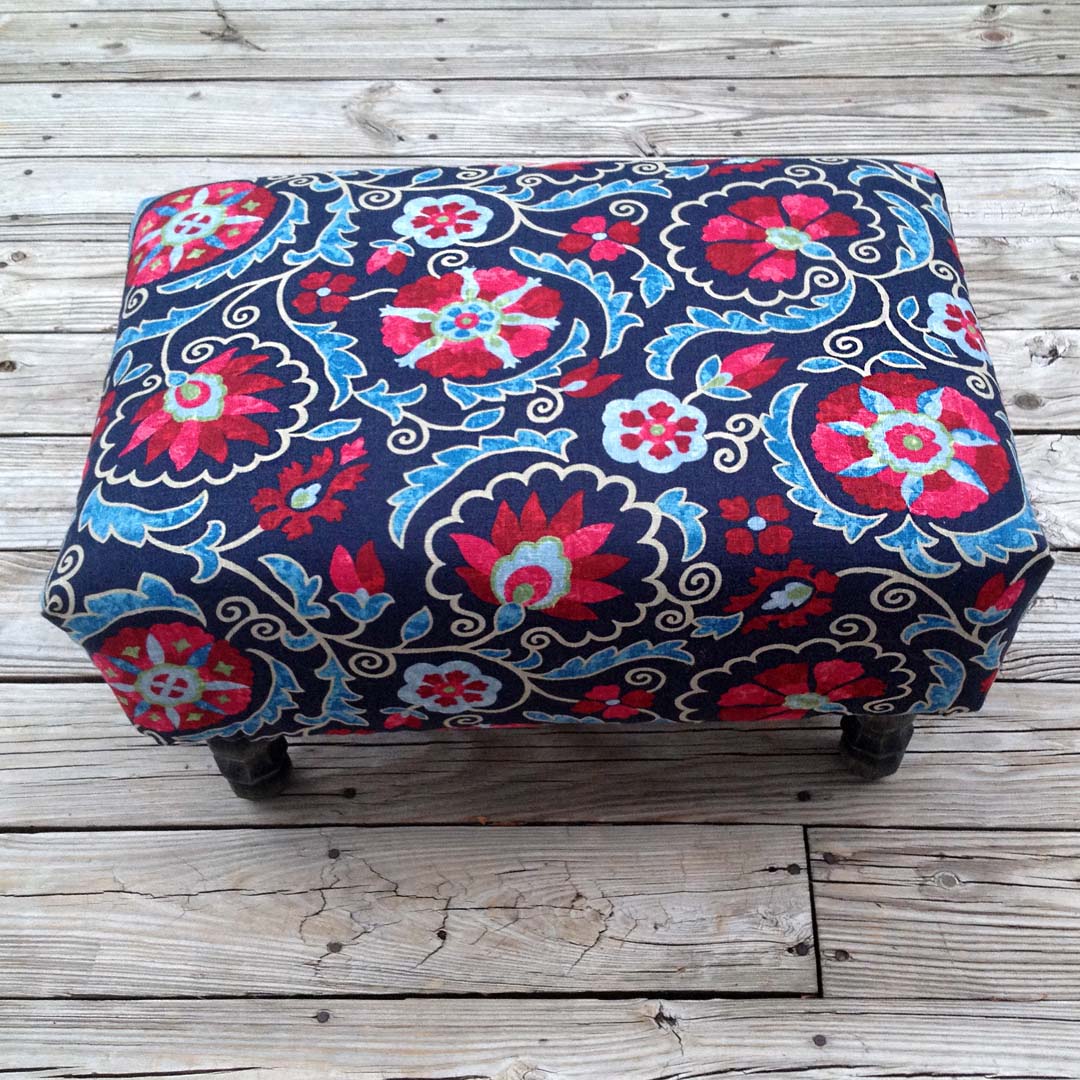
I feel very accomplished writing this post. I’ve been saying for about a month now that I planned to build an ottoman out of shipping pallets all on my own. Well, I finally did it. And, it’s cute!

After a busy morning yesterday, I had the perfect opportunity to make my ottoman. The house was clean and decorated, dinner was cooking in the crock pot, the hubbs was busy watching football…. the only thing left to do was tackle my project! And the weather was perfect.

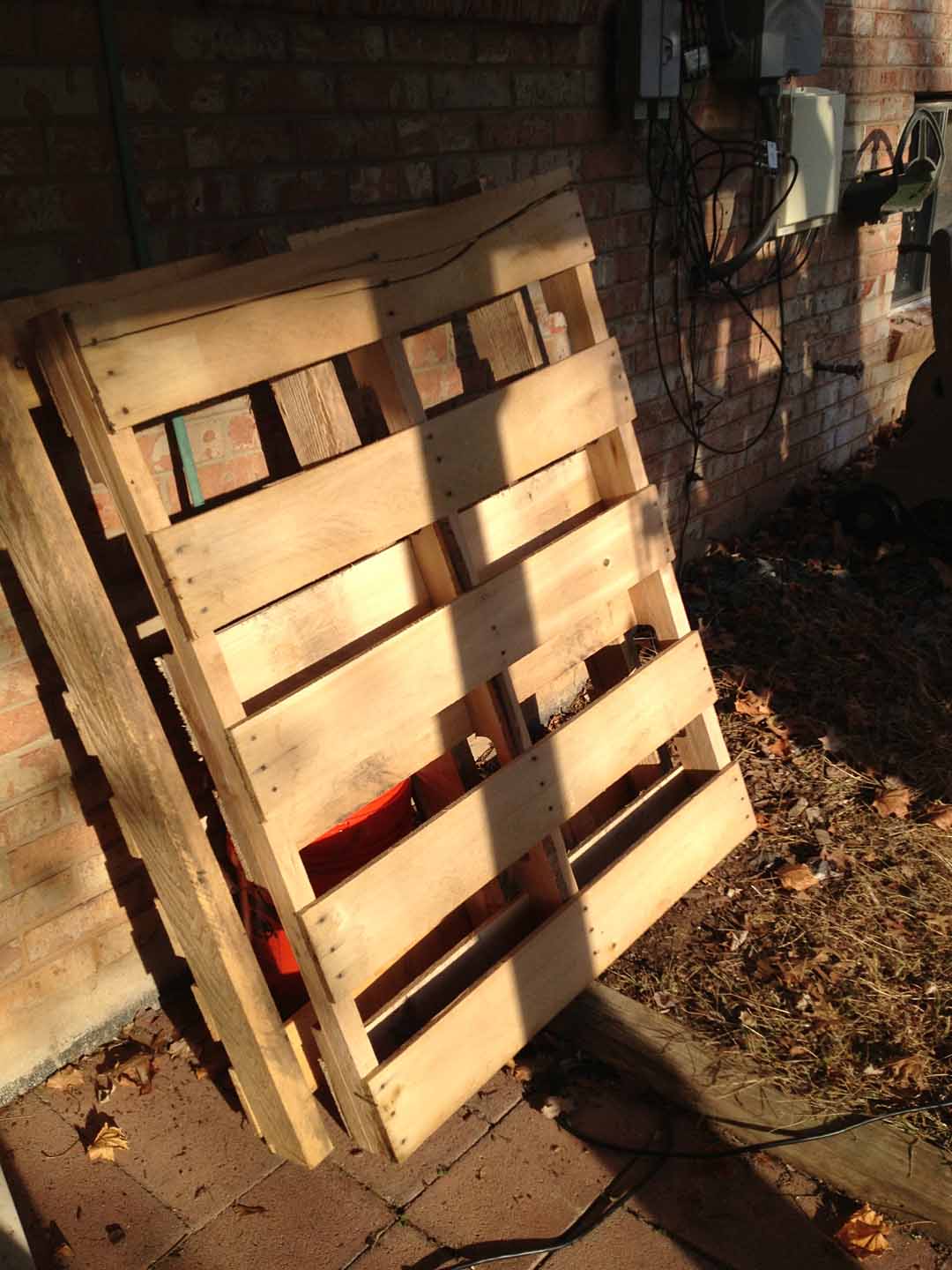
So I lugged four pallets from the front of the house to the backyard and pulled out my arsenal of tools and got to work.

IMG_2036 - Version 2

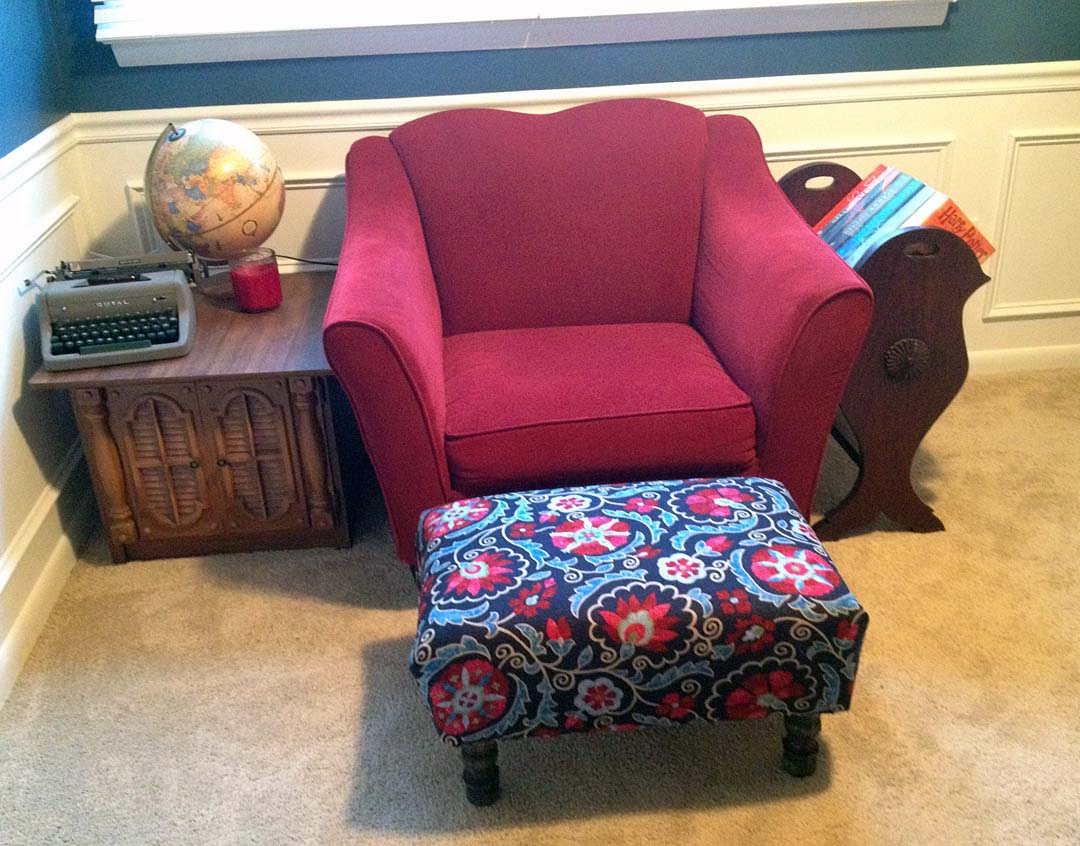
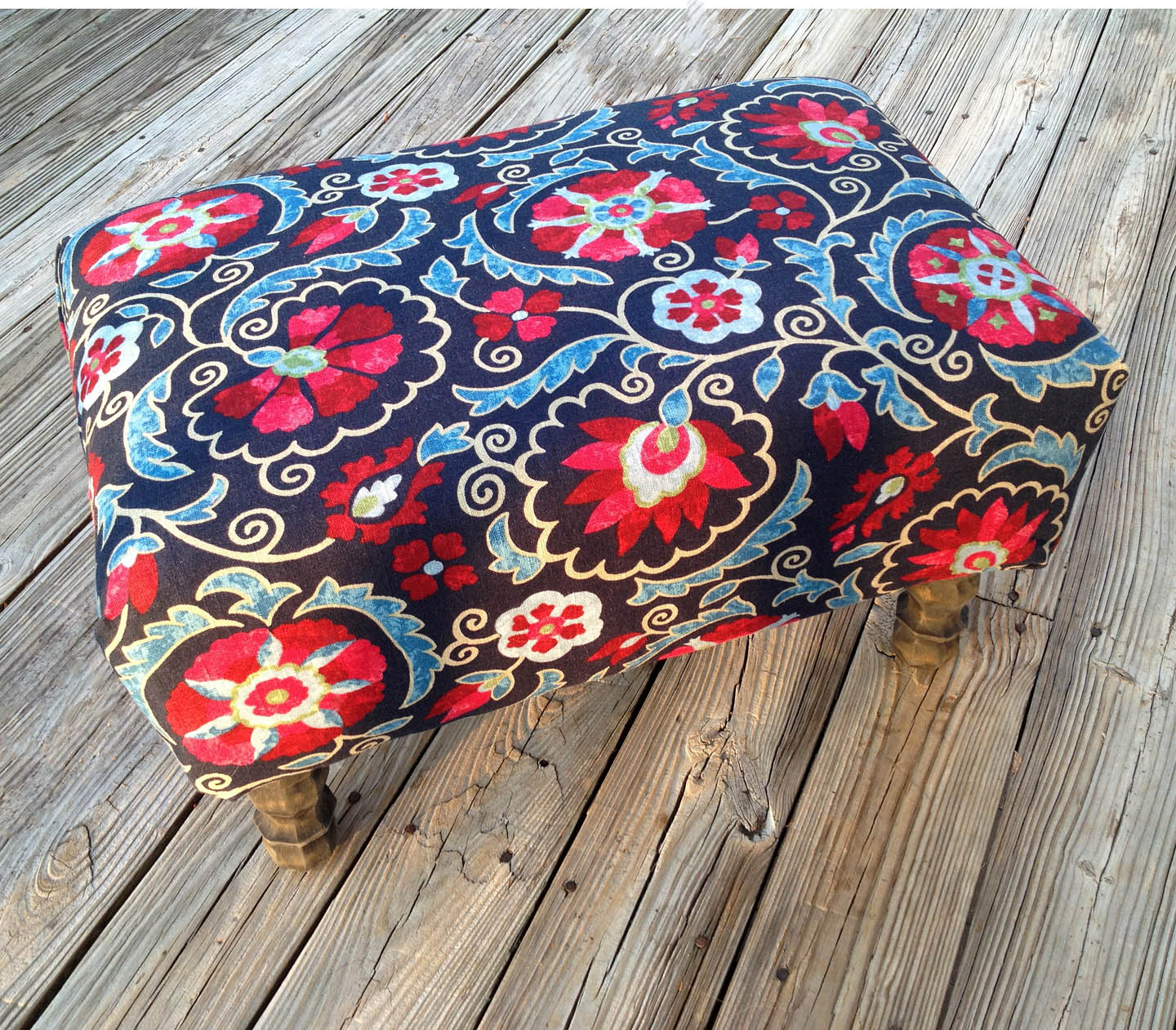
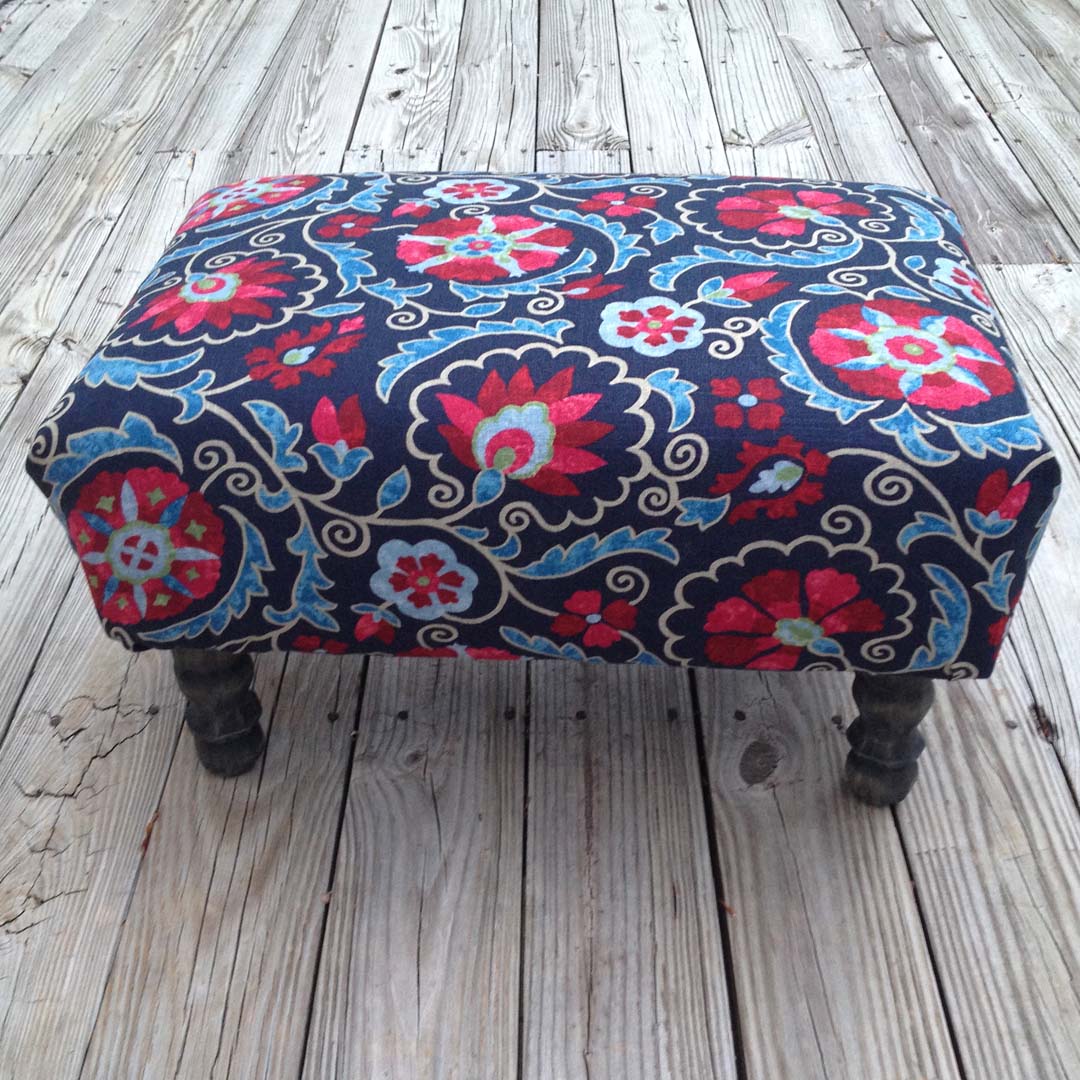
When I had the idea to make this ottoman, it was simply that, an idea. I had a plan in my brain, but wasn’t sure where it would go in the house or who would use it. So I trucked on over to JoAnn’s last weekend to look for some inspiration. Lo and behold I found a beautiful piece of fabric in the home decor aisle (that of course wasn’t on sale) that immediately became my inspiration of the project. The fabric was navy with cherry red  flowers on it, and it would go perfectly in our blue den in front or our red chair.

Now that I knew where I was making the ottoman for, I stood in a miserably long line to get a piece of foam cut for the project (24 in. x 16 in.) and my yard of fabric. The fabric was $45, but I had a coupon for 60% off. Honestly, that’s one of the reasons I waited in the 30-minute line…. that was a sweet discount.

Anyway, my foam and fabric sat around the house for a week before I had the chance to get my hands on it. I pretty much built the ottoman around the piece of foam, so it was pretty important.

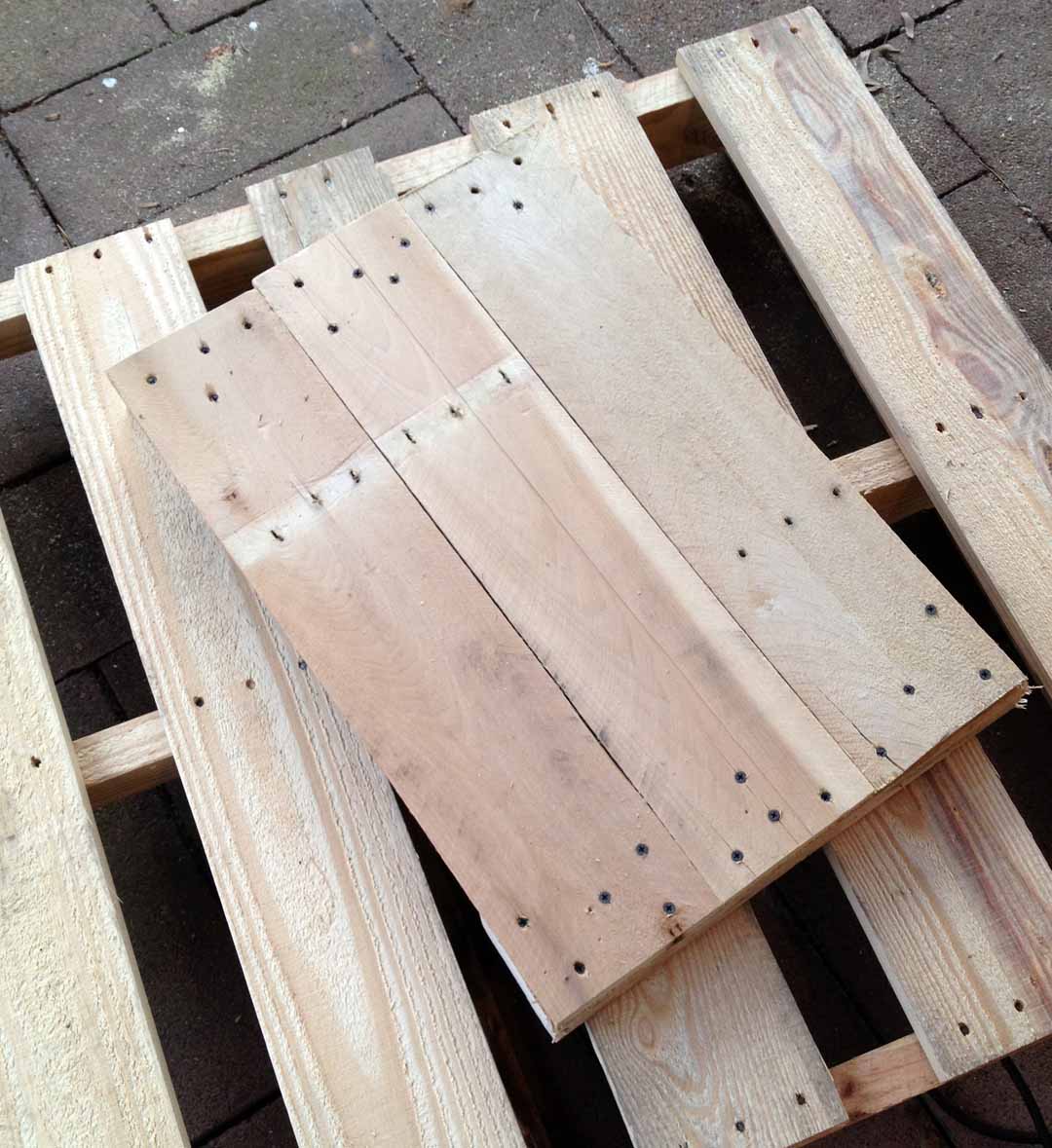
Onto the building part…. I tore two different shipping pallets apart to make this piece. The first I had already mostly used in my pallet sign project. With this project complete, that pallet is totally donezo. I took the top boards off of the second pallet by cutting them with my jigsaw (not quite the appropriate tool to use, but I had to work with what I have). The pallet boards were about 5.5″ wide, so I cut three of them down to the length I needed (24 in.). These boards were the surface on which I adhered my foam.  Then, I cut two 2×4 boards to go beneath the ottoman top to support the top and allow the boards to be joined. These two boards were 16 inches long, that way they spanned across all three boards (the short length). I screwed the three top boards into the two supports to start my structure.

IMG_2042

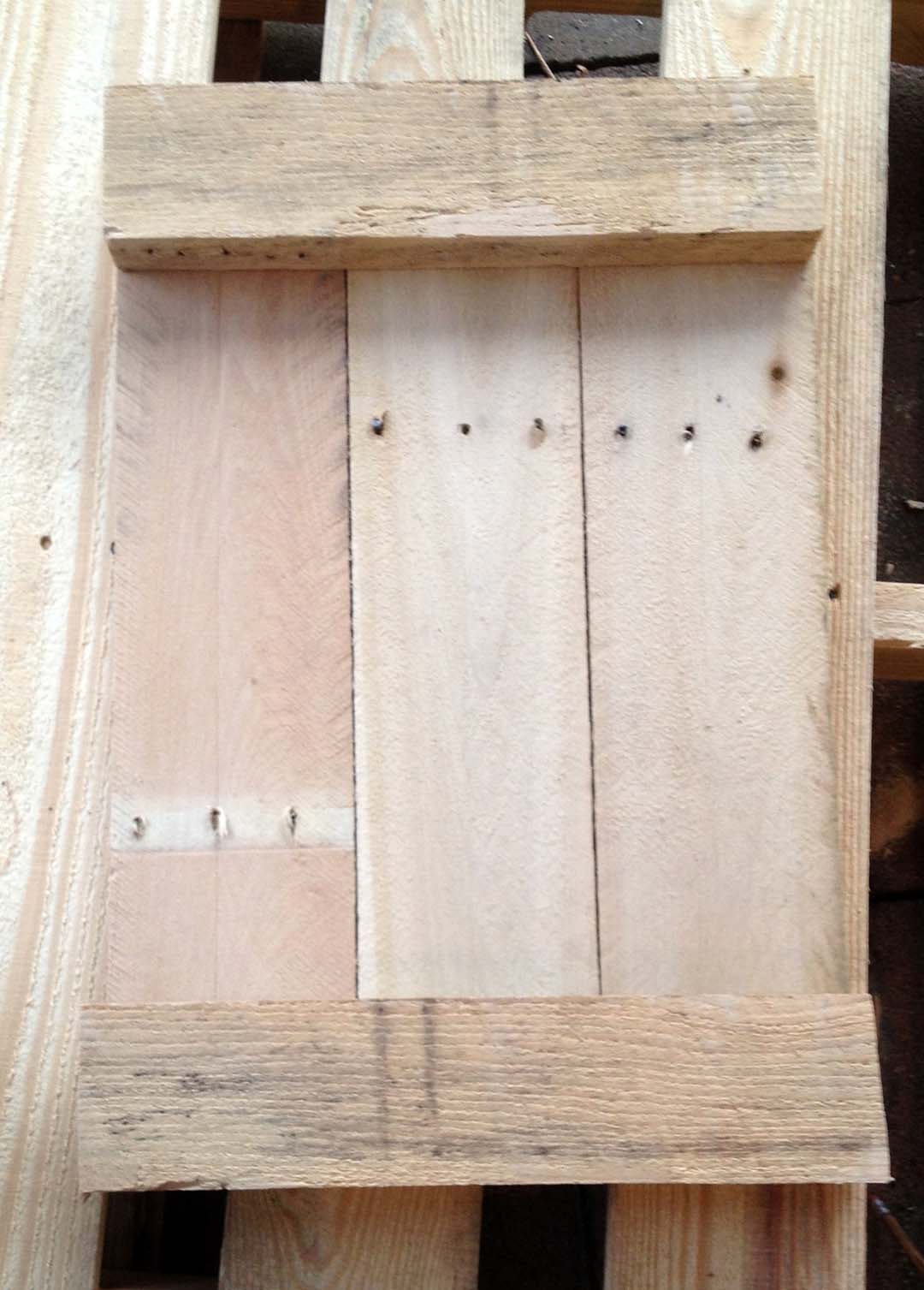
Once that was complete, I flipped my board over to measure the distance between the two support boards. I wanted to add support lengthwise as well, so I had to determine the size I needed of the 2×4.

IMG_2043

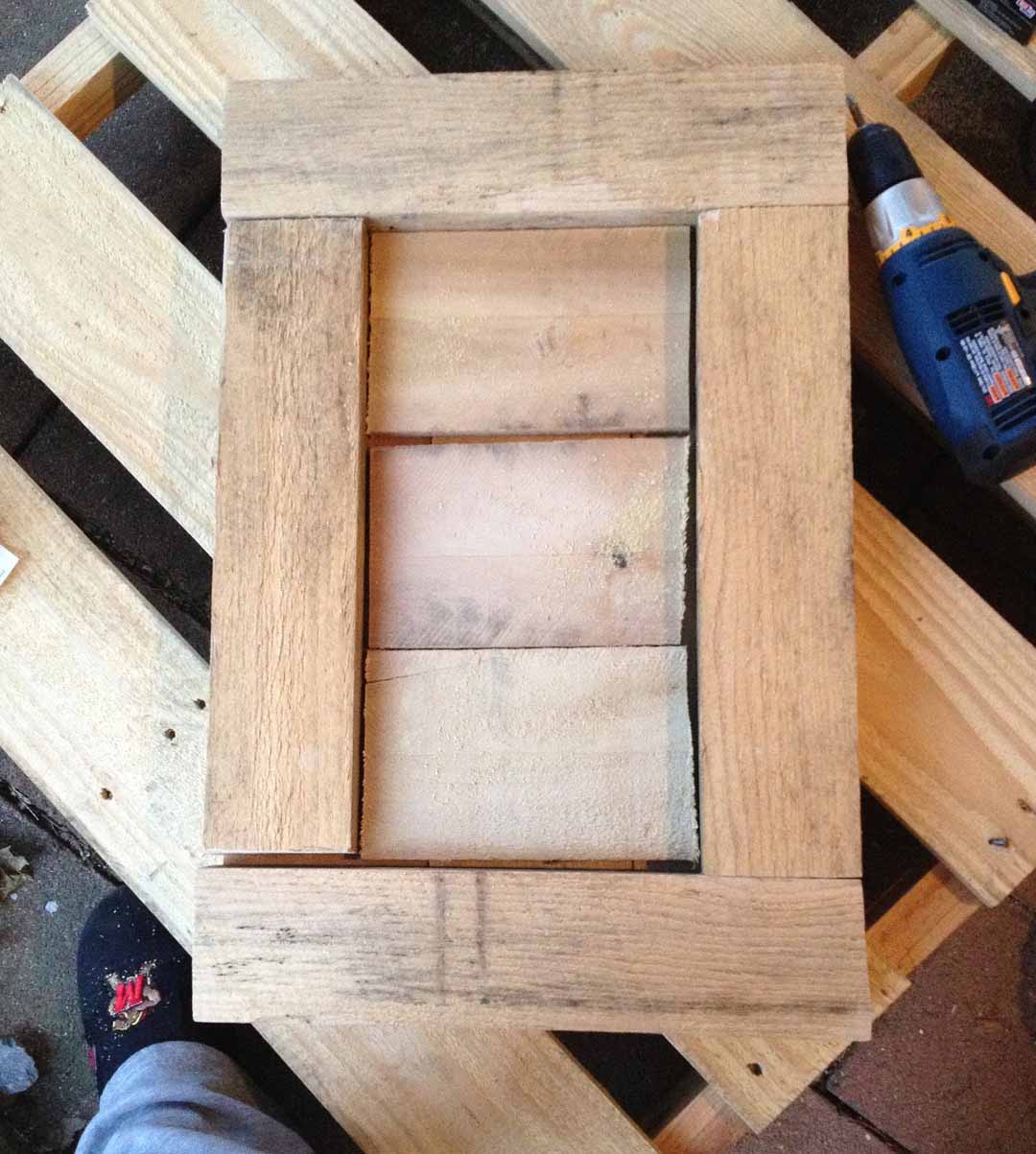
I cut two boards to fit along the edges, then screwed them into the structure from the top down.

As a final measure of sturdiness, I ran three boards opposite the three top boards (only in the center of the structure), and one final board along the middle.

IMG_2045 - Version 2

With everything screwed or nailed into place, my base for my ottoman was complete. Since none of the pallet wood would be showing, I didn’t sand or stain any of it.

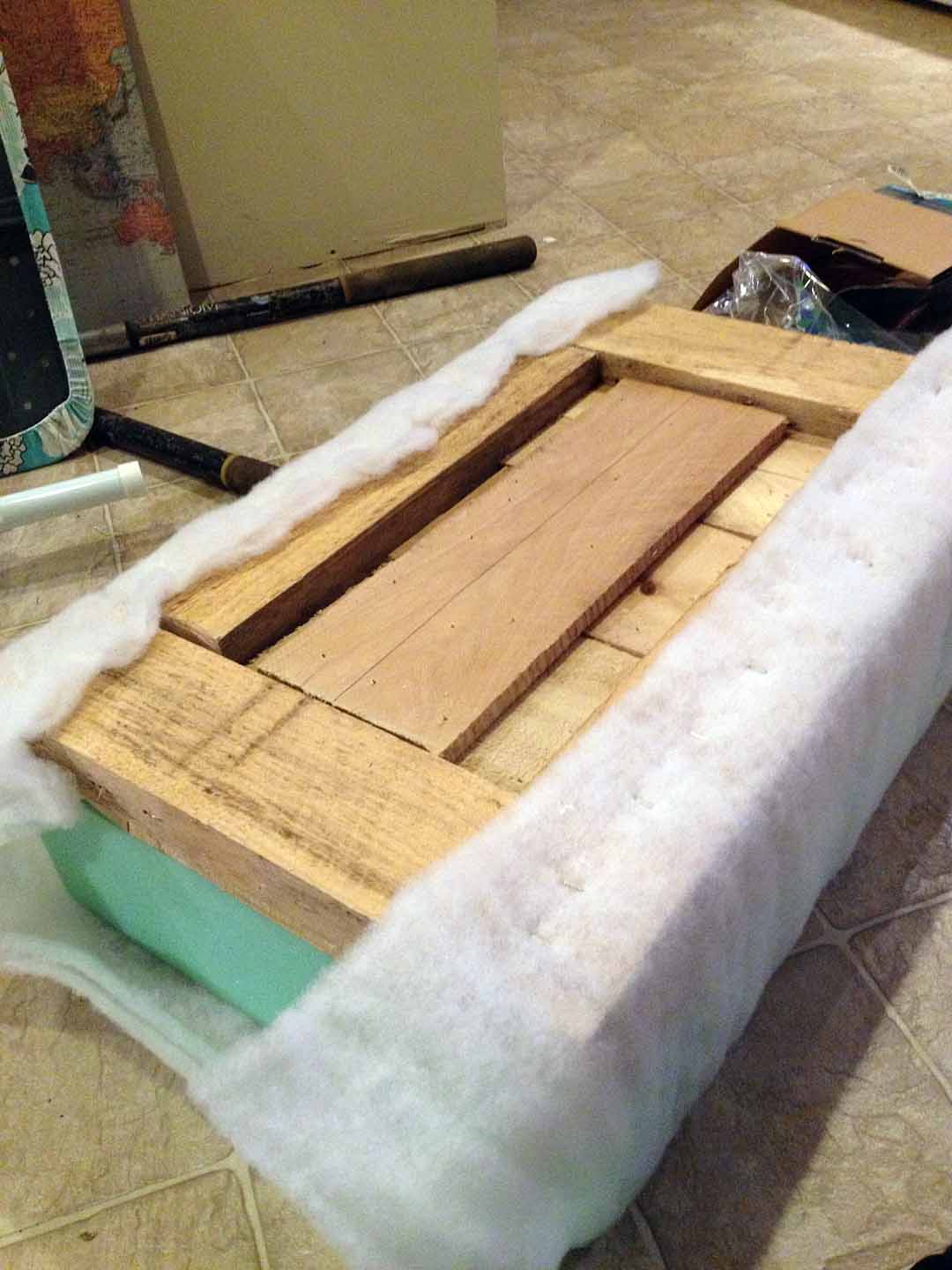
Next, I took some spray adhesive and sprayed the top of the ottoman base. I firmly placed my foam (4 in., high density) on top of the glue and let it sit for a minute. Once I couldn’t pull the foam off, I brought the project inside and began to cover the ottoman. I started with a layer of batting, which I wrapped around the long edge of the ottoman and stapled underneath. Then, I did the same thing width-wise. When I was finished with the batting, the entire top and sides of the ottoman were covered and plush.

IMG_2046 - Version 2

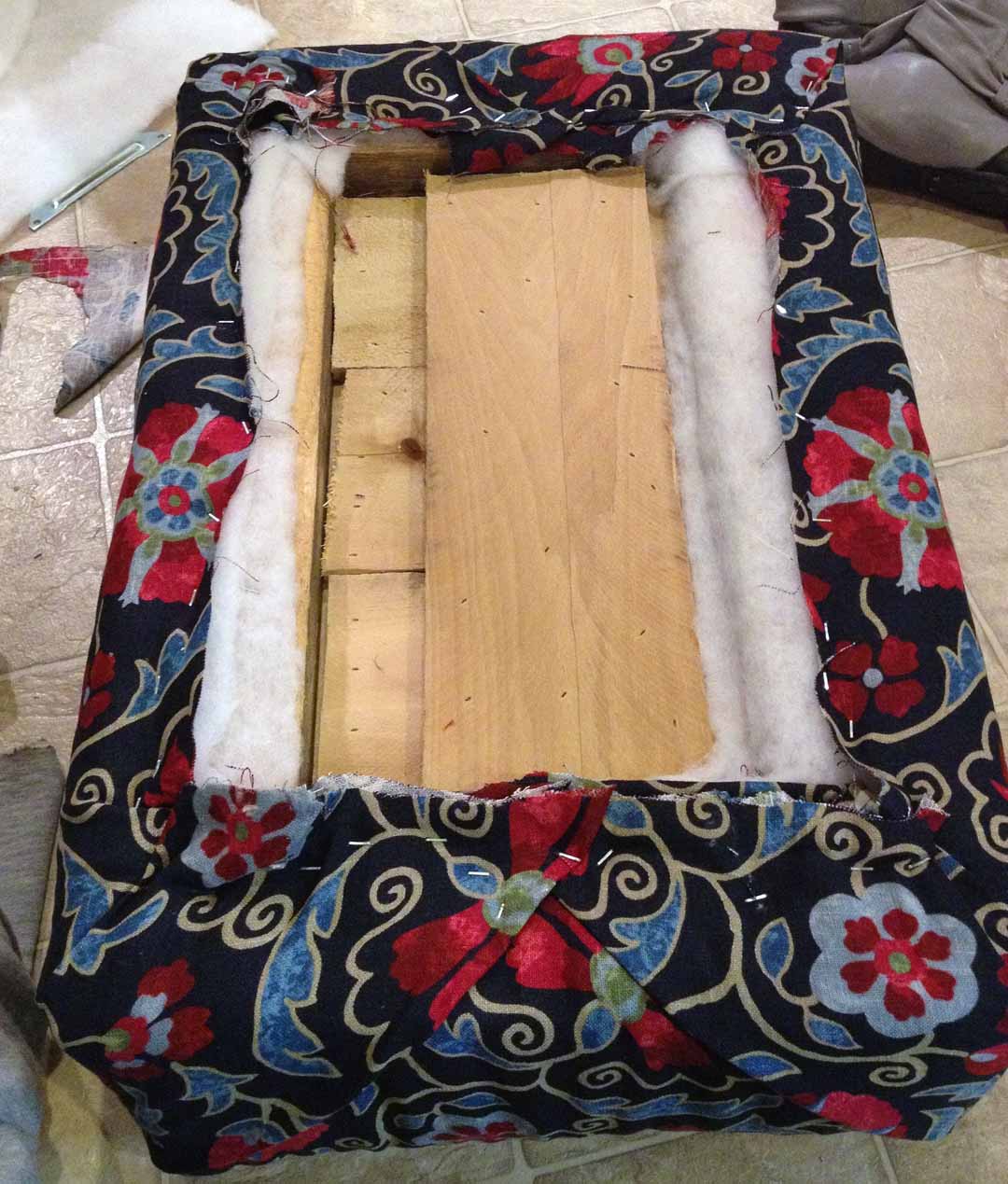
Next up, fabric!! I ironed my fabric, then laid it out on the floor to position the ottoman. Then I tightly (but not too tightly) wrapped it around and stapled it to the ottoman base. I did triangular folds around the corners to be a bit fancy. Oh la la!

IMG_2048

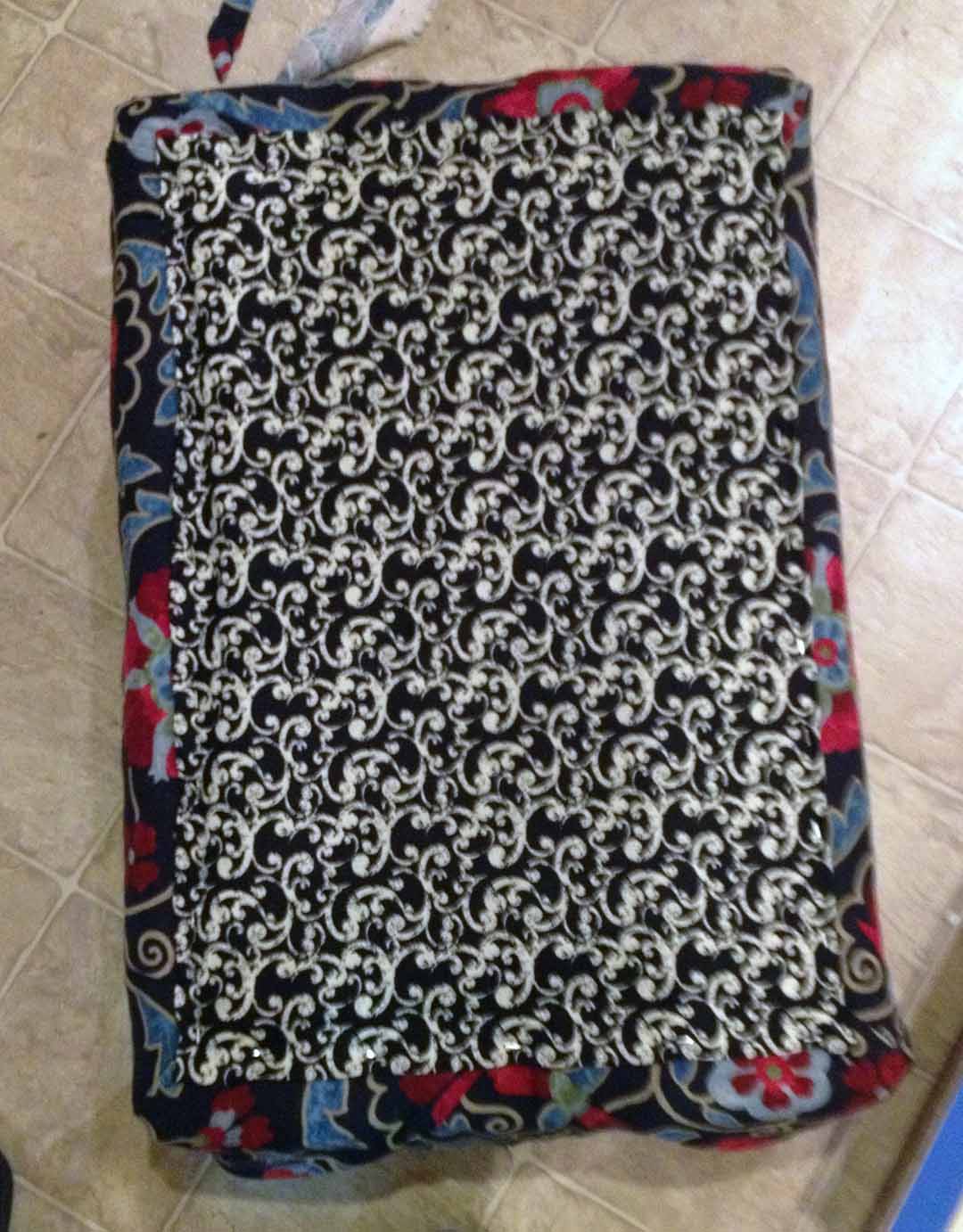
Once that was completed, I went the extra mile and added another fabric to the bottom so no pallet wood was exposed at all. For this step, I simply folder the edges of the fabric into a faux hem, then stapled them on top of the existing fabric. It turned out great!

IMG_2049 - Version 2

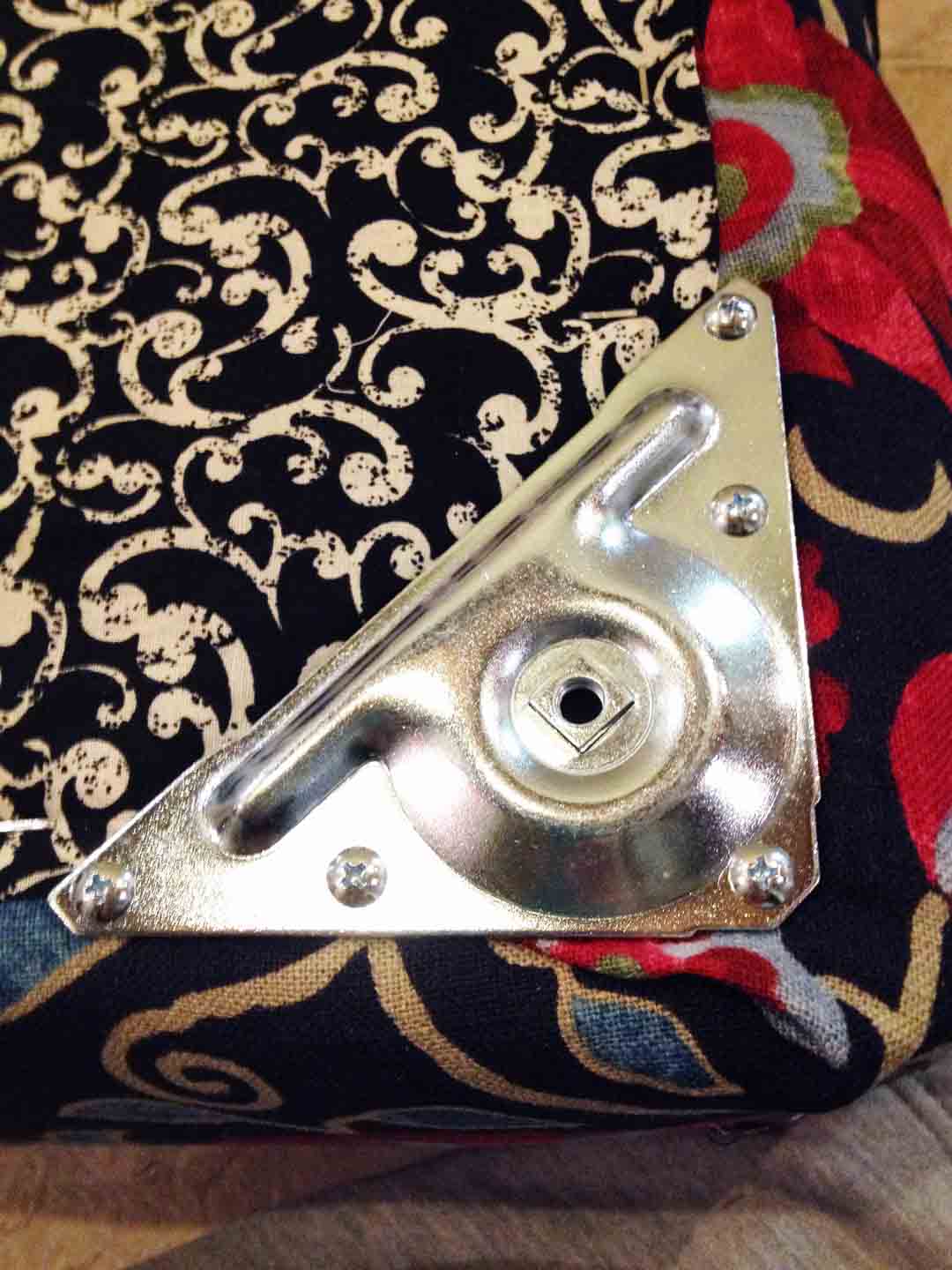
With my ottoman all covered, it was time to add the legs. I bought four heavy-duty leg plates at Home Depot that I screwed into the base. I definitely recommend this because it saves you from having to bore a hole into your base itself and makes it a little more secure and stable. Not to mention they are $2 or $3 a pop. Win.

IMG_2050 - Version 2

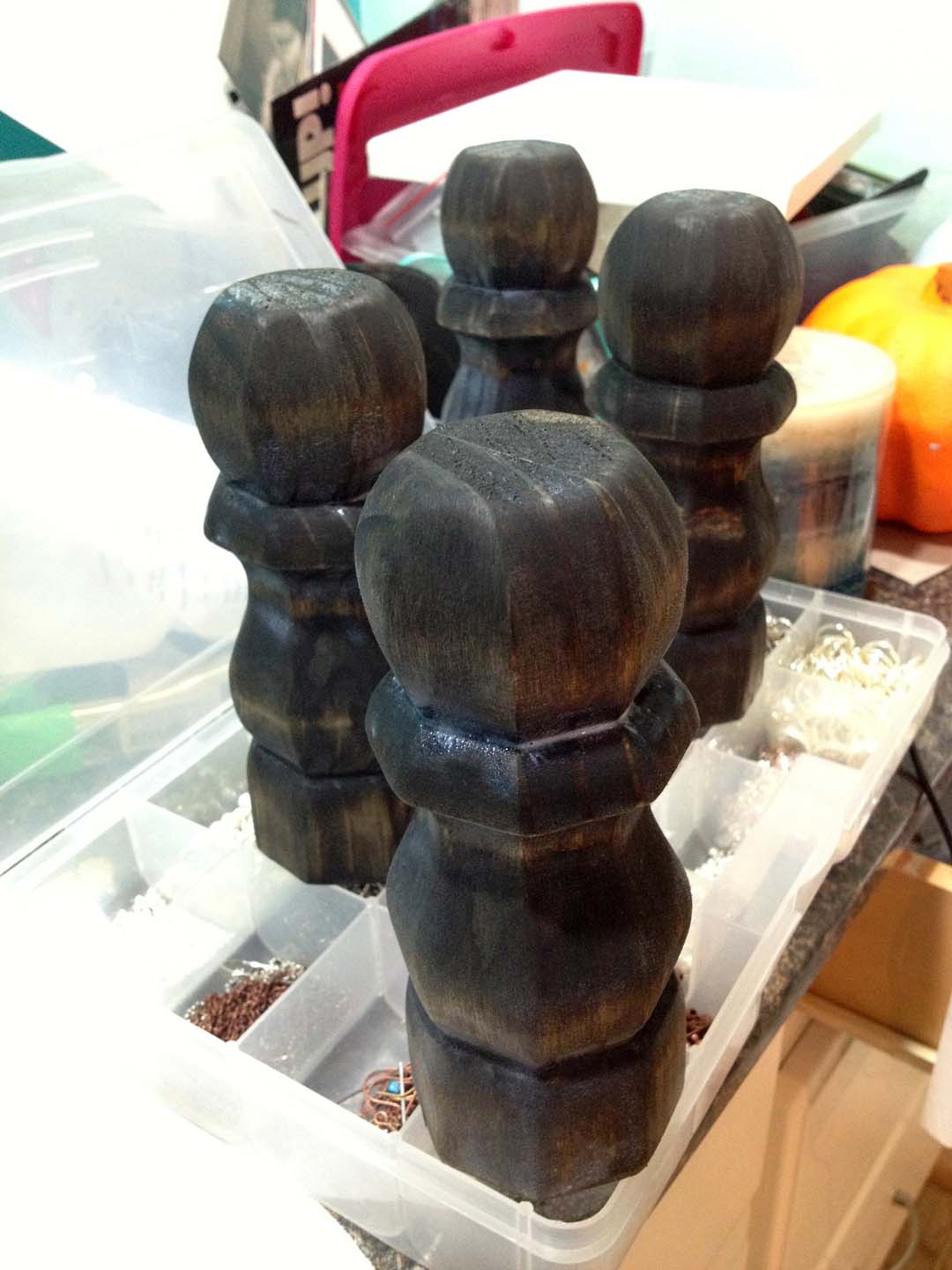
Meanwhile, I stained the legs black and gave them a quick coat of poly.

IMG_2053

When all of that was finished, I assembled the whole thing and was done. Time to relax on my fabulous, new ottoman. Or should I say, time for Remmy to relax (so spoiled!).

Remmy on Chair

IMG_2055

Finished Ottoman

IMG_2085

IMG_2077

To say I am pleased with how this turned out would be the understatement of the century. I am still slightly shocked that I pulled it off having never built anything from scratch before and totally winging the plans, which I created in my non-mathematical brain of mine. Wow.

It looks great in our room and I couldn’t be happier with how it turned out. And now that I know I can do it, appropriate tools or not, I will happily tackle another ottoman project as soon as we buy a new couch for our family room. I don’t want to build it without knowing the style of couch we’ll end up with, but I am now confident I can do it.

Happy Monday, everybody 🙂