Craft Projects, Jewelry

Basic Necklace Tutorial

I said months ago that I’d do a few tutorials on how to make jewelry. Well, today is my lovely coworker Rachel’s birthday (happy birthday, Rachel!!!) and I make all of my female coworkers jewelry for their birthdays. So I took the opportunity to take a few photos as I made her necklace — don’t worry, I already gave it to her so this isn’t a spoiler — so you all can see what I did. This tutorial is very basic and all of the supplies (minus these specific beads) can be found at Michaels, JoAnn’s, Hobby Lobby, etc.

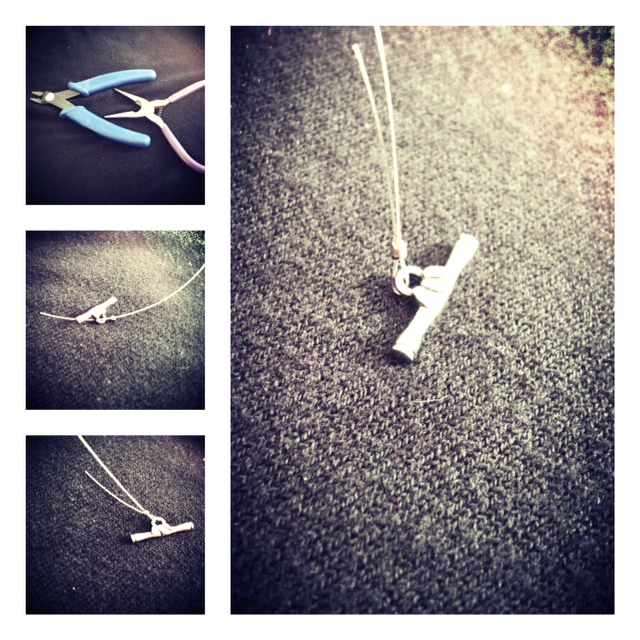
First and foremost, you’ll need beading wire, crimp beads, a clasp and beads. You can use crimping pliers (mine are blue) or flat pliers (mine are purple) for this project (top left photo).

Step One: Cut the wire to the length you’d like it to be. Add a few extra inches for wiggle room.

Step Two: Place a crimp bead on your wire followed by your clasp (middle left photo). For this necklace, I used a toggle clasp and a gun metal crimp bead to match it. I love toggle clasps way more than the regular lobster class. They add that extra something to necklaces.

Step Three: Send the wire back down through the crimp bead so the wire makes a closed loop around the ring of the clasps (bottom left photo).

Step Four: This step has two options, depending on which set of pliers you choose to use. Pull your crimp bead close to the clasp, so only 1 or 2 mm of wire is showing. That gives the clasp a little wiggle room on the necklace, which I’ve found to be helpful when using toggles.

When your crimp bead is where you want it, grab your pliers. For crimping pliers, smash the bead with the top notch of the pliers to flatten the bead. Proceed to the second notch and crimp it again. This step puts a fold into the crimp bead. Finally, move your crimp bead back up to the top notch and crimp it again. This will round out the bead so it looks smooth along the wire (right photo).

If you have flat pliers, you can definitely just smash the crimp bead. It performs the same function as a crimp bead that’s been secured with crimping pliers, it just doesn’t look as nice. That doesn’t mean it looks bad, though. I used to do that with all of my necklaces until I bought the crimping pliers.
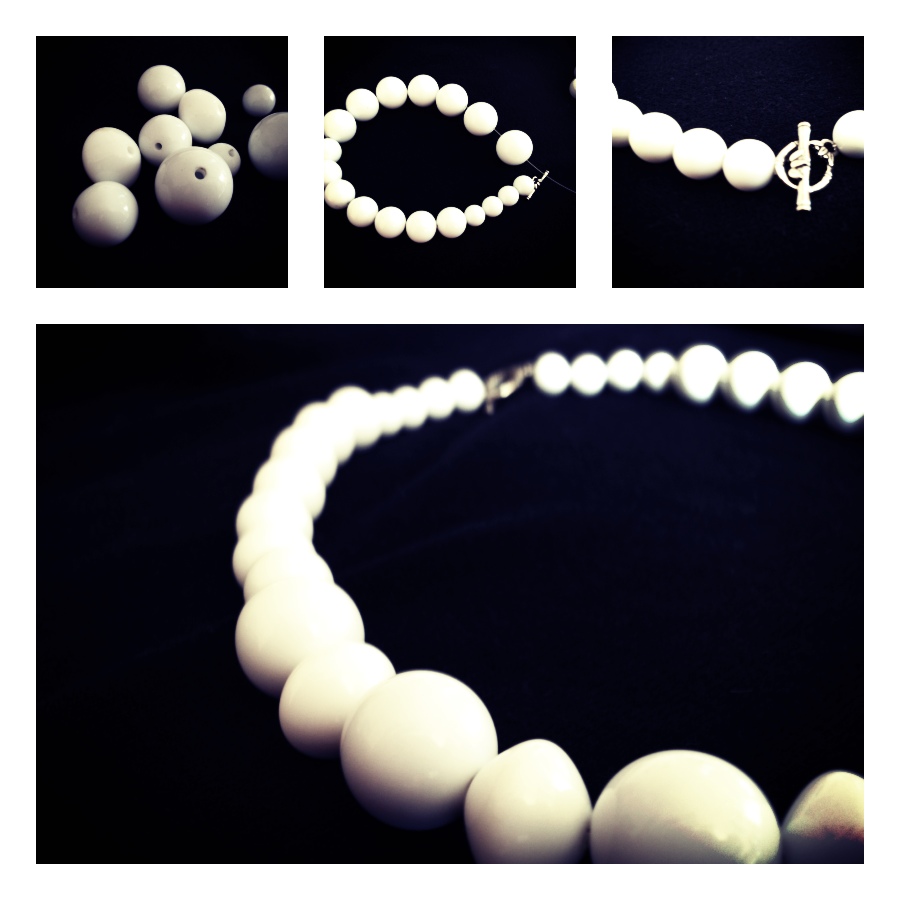
Step Five: Once your bead is crimped, it’s time for the fun part. Pick out your beads! I chose white plastic beads (top left photo) for Rachel’s necklace that I found at a thrift store. Gotta love recycling beads 🙂

Step Six: String your beads along the wire however you please (top middle photo). I know a lot of people like to use necklace organization tray, which allow you to place the beads how you want them on the necklace to see how it looks. Honestly, I just wing it. I think it’s more fun that way.

Step Seven: When all of your beads are strung, place the crimp bead onto the wire, followed by the second part of the clasps. Like the first time, re-loop the wire through and crimp your bead (top right photo). That will secure all of the beads on the wire and the clasps on the end.

Step Eight: Rock your new creation (bottom photo)!
Happy birthday, Rachel. I hope you like your new necklace and that your day is fantastic!!

Craft Projects, Jewelry, Quick and Easy Crafts

DIY: Spoon ring

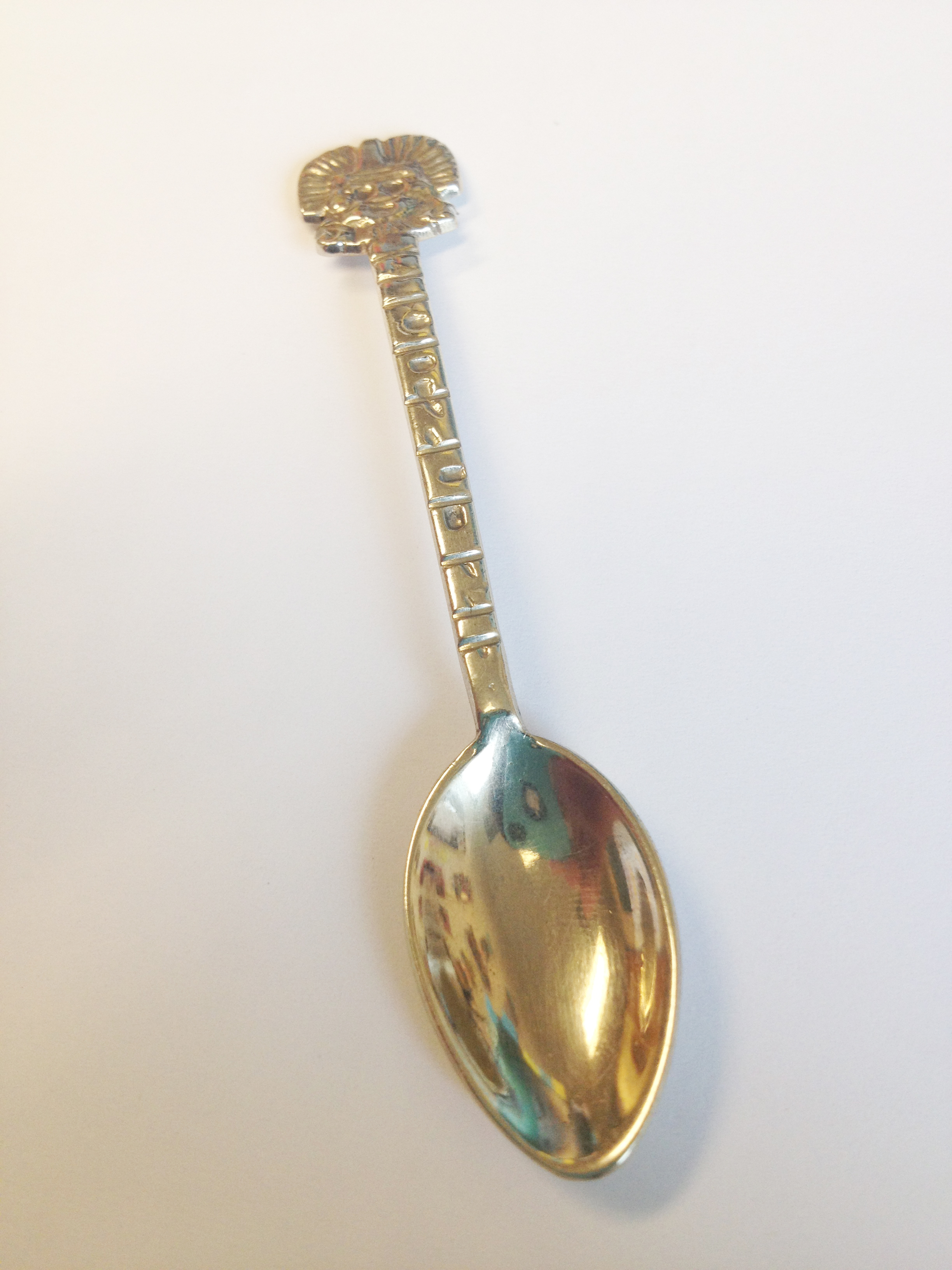
I was visiting my momma the other day and as I’m walking out of the door she hands me this little spoon from Cancun, Mexico.

“You’re crafty. Do something with this,” she told me, pawning off her unwanted souvenir.

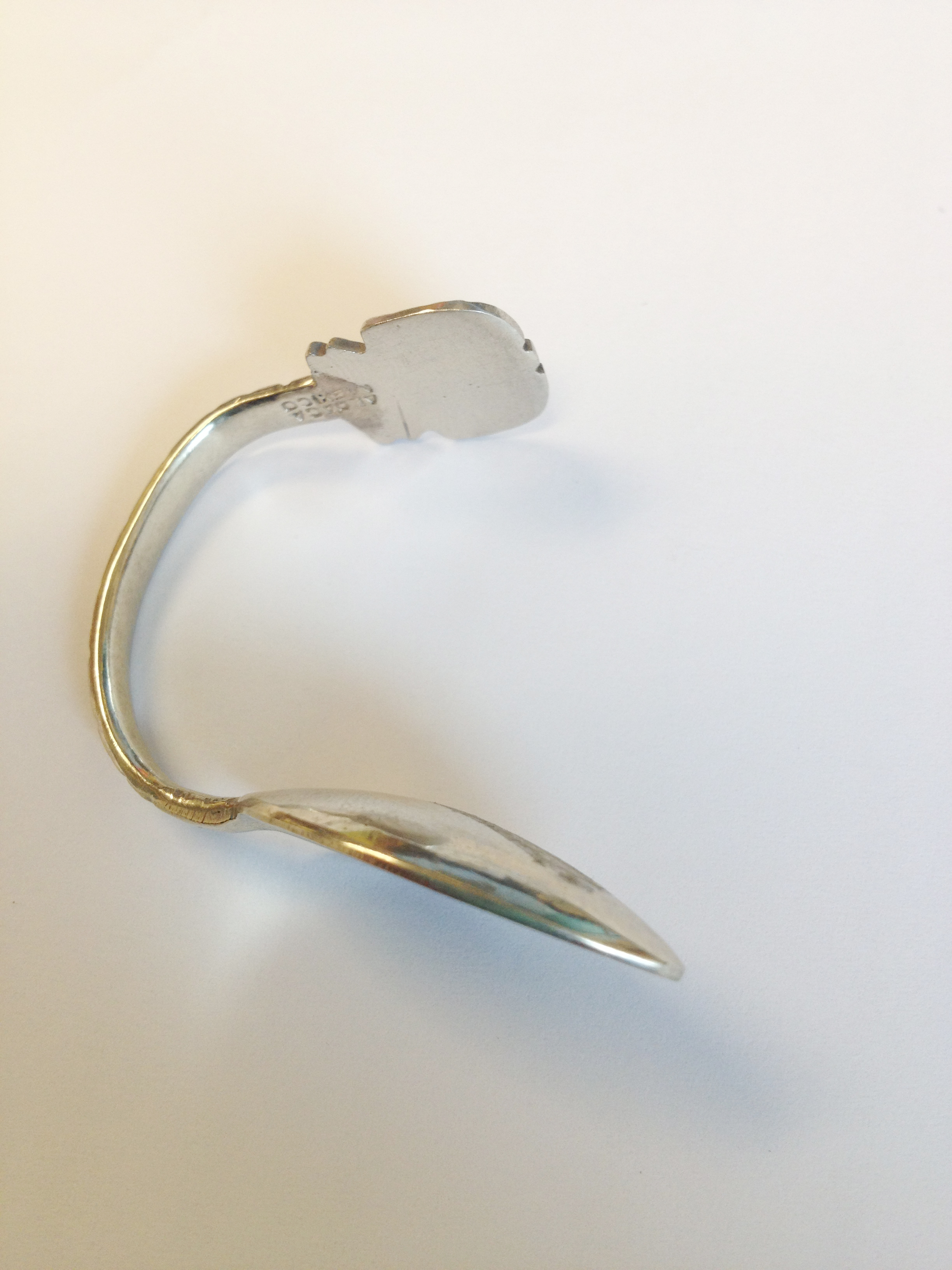
I found the spoon in my purse today when I was sifting through the mounds of crapola. It has no markings on the back to indicate what it is made out of, but I noticed right away that it is super bendable. Like many other crafters out there, I decided to make a spoon ring. At only 3 or so inches long, it seemed like the perfect size for my first spoon ring.

For tools, I used a hammer, pliers, a nail file (a cheapy paper one, too), and the handle of a lint brush. I should also add that I created this ring at my desk at work on my lunch break with the tools in my desk. Yes, I am a writer. Yes, I have a hammer in my desk. Yes, my tools are pink. And yes, I sometimes get teased by my male coworkers that all of my tools are pink (which they are not!) :p

Since the ring was so easy to bend, I was able to wiggle the end of the spoon back and forth until it broke off. I then took my nail file to the rough edge of the ring until it was smoothed out.

At this point, I bent the spoon with my hands into a circle shape. It wasn’t pretty, so I popped it onto the cylindrical handle of my lint roller and hammered gently so the ring would round itself out. It worked!

Note: I didn’t care if you could read the “Cancun” part of the spoon once I was finished (you still can), so I hammered the spoon without anything in between the spoon and the hammer. I’d recommend placing some sort of barrier in between your spoon and hammer if you care about that part of the ring not getting scratched. Like I said, mine was fine… but just in case!

How cute! And to think I made the ring using a lint roller handle and a nail file! I do have a ring dowel at home, which I will certainly use for future spoon rings, but I think my makeshift tool set worked rather well for this impromptu project. All in all, this project took about three minutes! Not too bad.

Now it’s time for lunch! Enjoy your days and thanks for stopping by!

Uncategorized

Five tools for your crafting arsenal

Yesterday was my 24th birthday and I was spoiled with crafting goodies. I received a set of clamps, a dremel and a jigsaw.

HOLYCOWIAMSOEXCITEDTOUSEMYNEWTOOLS!

As I collect more and more items for my tool arsenal, I figured I would share which tools I find most useful. So, here are five tools that all do-it-yourselfers should have at their work benches.

No. 1: Hot Glue Gun

This might seem like a silly item, but let’s face it, most crafts call for hot glue — especially the more simple of crafts. If you don’t have a hot glue gun, you are pretty much in the stone age. You can buy a glue gun pretty at any craft store, hardware store or any big box retailer like Target, Walmart, etc. I bet some grocery stores also sell them — and they aren’t expensive at all. You can buy a glue gun and refill sticks for under $15.

No. 2: Staple Gun

While I am dying to get my hands on a nail gun, my staple gun has done the trick for me so far. Staple guns cost about $20 and can be purchased at hardware stores or other stores with hardware sections. They are really versatile tools because you can load them with staples of varying length depending on the project. And, they are super lightweight and easy to use. I use mine all the time for upholstery projects (although the husband put it away and now I can’t find it!). you’ve gotta get your hands on one of these if you don’t already have one.

No. 3: Sander

If you ever plan on refinishing an old piece of furniture, you are going to need a sander. I just got my sander as a Christmas gift and I’ve already used it several times. Make sure you buy different grits of sandpaper — the rougher the paper, the more and quicker you’ll be able to sand down your project. Start with a rough paper, then work your way to a softer paper for a smooth finish before you paint or stain.

No. 4: Dremel

So obviously I just got my dremel yesterday and have yet to experience its wonders for myself, but I can already tell this is a tool I am going to love. The dremel has 25 accessories, including pieces to grind, sand, cut, carve, engrave, and polish — I cannot wait to try it out! I’ll be honest and admit I’m not quite sure where to start, but I will keep you updated!

No. 5: Pliers of all shapes, functions and sizes

Pliers are so freaking useful! They grab onto things our fingers can’t grasp, the cut wire, the fit into tiny places… they are awesomely useful. I’ve probably got about 10 different kinds of pliers in my tool kit — some flat, some pointed, some with a cutting edge, some with grips. They are incredibly useful for jewelry making and come in handy for a lot of other crafts. And, best of all, they are super cheap. You can buy pliers at the dollar store, craft stores, hardware stores, etc. If you don’t have pliers (and that is just crazy), what are you waiting for!?

What tools do you use most often? I’m always down for suggestions of tools to try out!